Shanghai

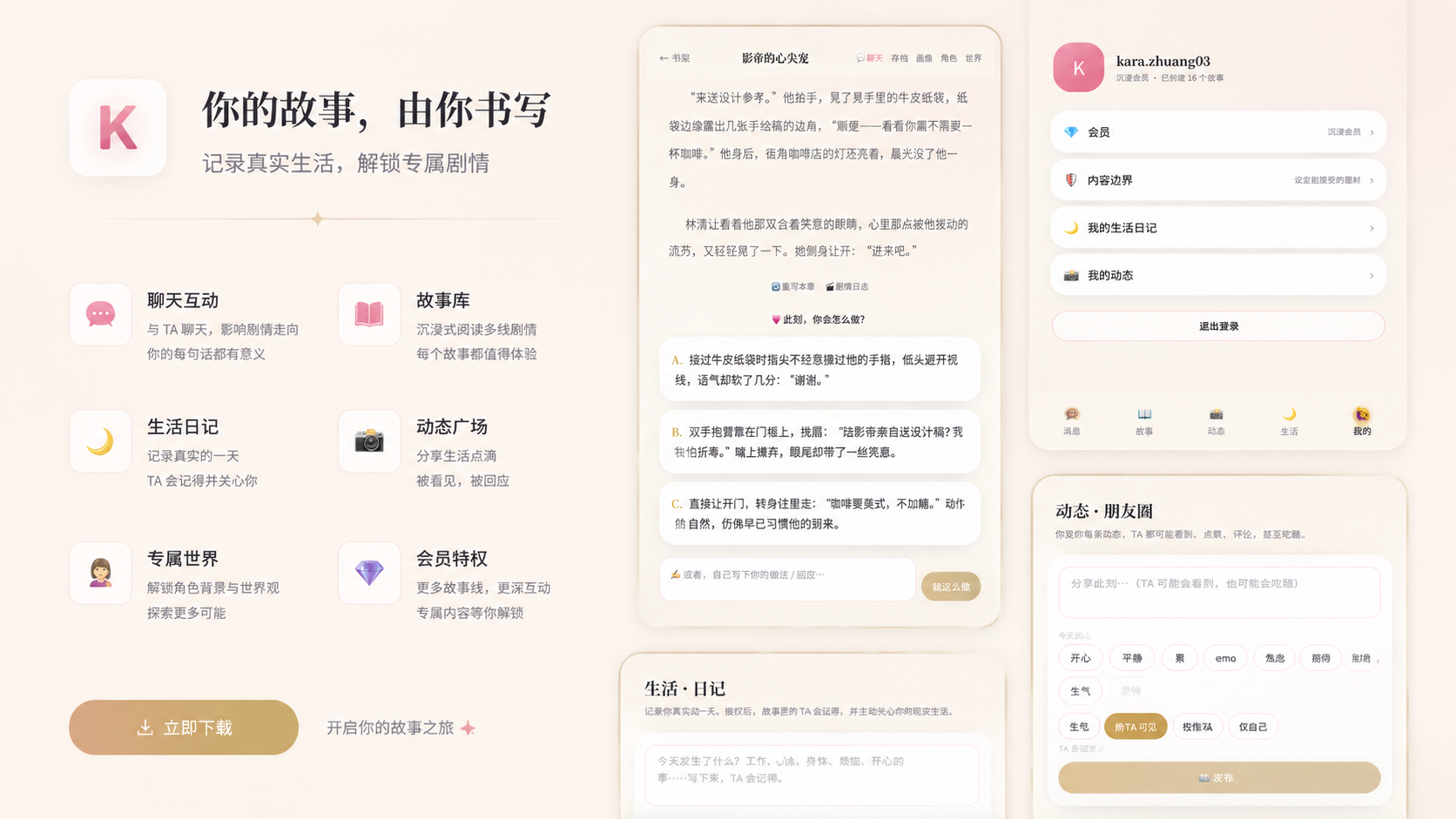
This project began from a conversation with a friend who frequently reads romance and fictional novels. She expressed frustration that many stories follow predictable structures, and that even highly popular narratives often develop into directions that no longer match her personal interests.
Instead of searching for a better existing story, I explored a different question:
What if readers could participate in creating the story itself?
I developed an AI-powered interactive fiction prototype that allows users to create personalized romance, science fiction, and fantasy narratives where characters, relationships, and story progression dynamically adapt to individual preferences.
The system combines customizable worldbuilding, AI-generated characters, conversational interaction, and choice-based storytelling to create fiction that evolves based on each user's decisions.
Traditional novels provide a fixed narrative authored in advance. Interactive games provide structured choices within predefined possibilities.
This project explores a third possibility:
A personalized narrative space where the reader becomes a co-creator of the story world.
Users can design their own fictional experiences through:
Rather than consuming a finished story, users participate in shaping the direction, characters, and emotional trajectory of the narrative.
Users can create their own fictional worlds by selecting from structured categories such as:
For users who want greater control, the system also supports fully customizable inputs, allowing them to define:
AI then expands these initial ideas by generating additional world details, character backgrounds, and narrative possibilities.
The system allows users to create original characters or generate characters through AI.
Each character contains:
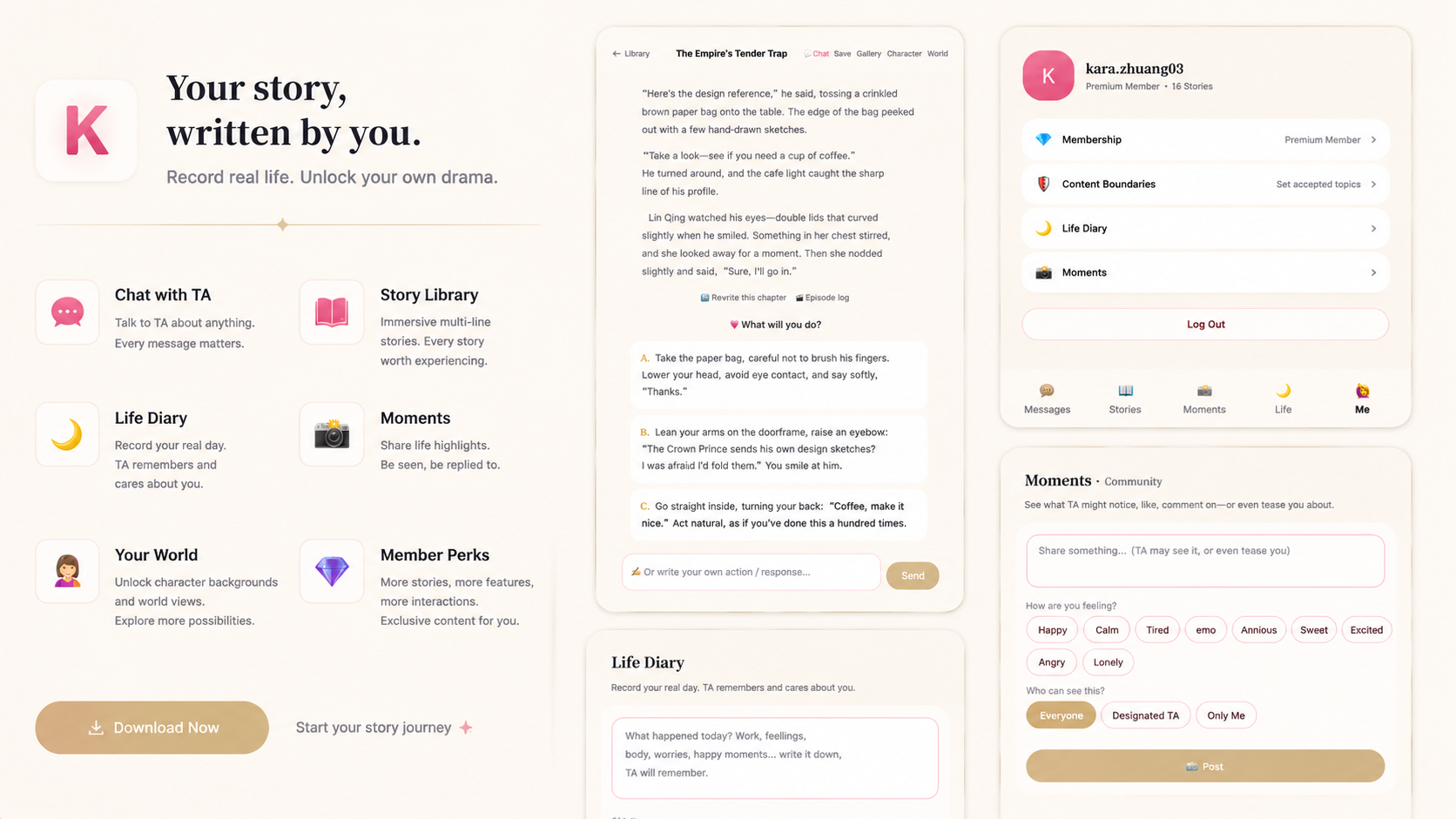
Users can communicate directly with characters through conversational interaction, extending the fiction beyond traditional reading.
Characters respond based on accumulated context, allowing relationships to evolve over time.
Instead of following a fixed storyline, users influence the narrative through decisions.
At key moments, users can:
The system tracks narrative variables such as:
These factors influence future chapters and character responses.
The user's actions become part of the story structure rather than simply selecting from predetermined outcomes.
The platform also explores the relationship between fictional and personal identity through a social posting feature.
Users can share experiences, thoughts, and daily events within the platform. These personal entries can influence future character interactions, allowing fictional relationships to incorporate aspects of the user's ongoing life.
This creates a space where the boundary between authored fiction and personal experience becomes increasingly flexible.
.png)
.png)
The prototype was developed through rapid AI-assisted programming workflows.
I used:
Because the platform was designed primarily for Chinese-speaking users, the system was adapted around Chinese-language interaction patterns and cultural preferences.
The development process explored how generative tools can accelerate prototyping while requiring human-designed structures to maintain narrative coherence and user experience.
This project shifted my understanding of interactive storytelling from designing fixed experiences toward designing systems that enable experiences to emerge.
The challenge was no longer:
"How do I write the best story?"
but:
"How do I design a system that allows every user to create a story meaningful to them?"
The project became an exploration of authorship, personalization, and collaboration between human imagination and generative systems.
This prototype connects directly to my broader research interest in generative worlds and AI-mediated creativity.
It explores questions including:
The project represents an early experiment in designing systems where AI does not replace creative participation, but becomes a collaborator within the creative process.
.png)
